
The Silent Epidemic in Women’s Sports: ACL Injuries and How to Prevent Them
By NICK PETRALIA
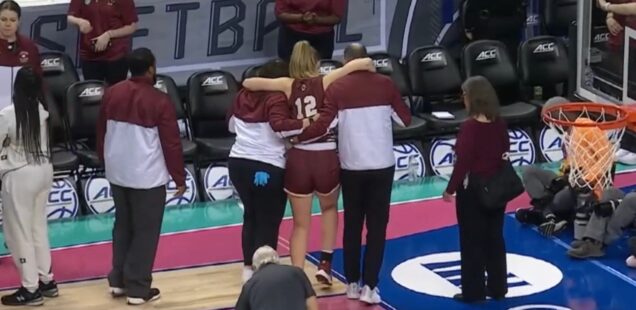
“Injury timeout on the floor!” The words thundered from the arena’s speakers as a Boston College player lay on the court, clutching her leg in pain. Hannah Berg, the athletic trainer for BC women’s basketball team from Melrose, Massachusetts, stares at the injured athlete with a sick feeling in the pit in her stomach. The player had gone down after making a move towards the basketball without any contact from the defender.
“That’s when you know,” said Berg. “Your gut just flips and you’re like, ‘Well, shit.’”
Her experience as an athletic trainer at Kent State, Fort Lewis College, and the University of New Hampshire has taught her to recognize a possible ACL tear right away.
“[When] you’ve seen so many,” said Berg, “you just get this gut feeling that it isn’t good… You never know for sure, but you start planning your next steps.”
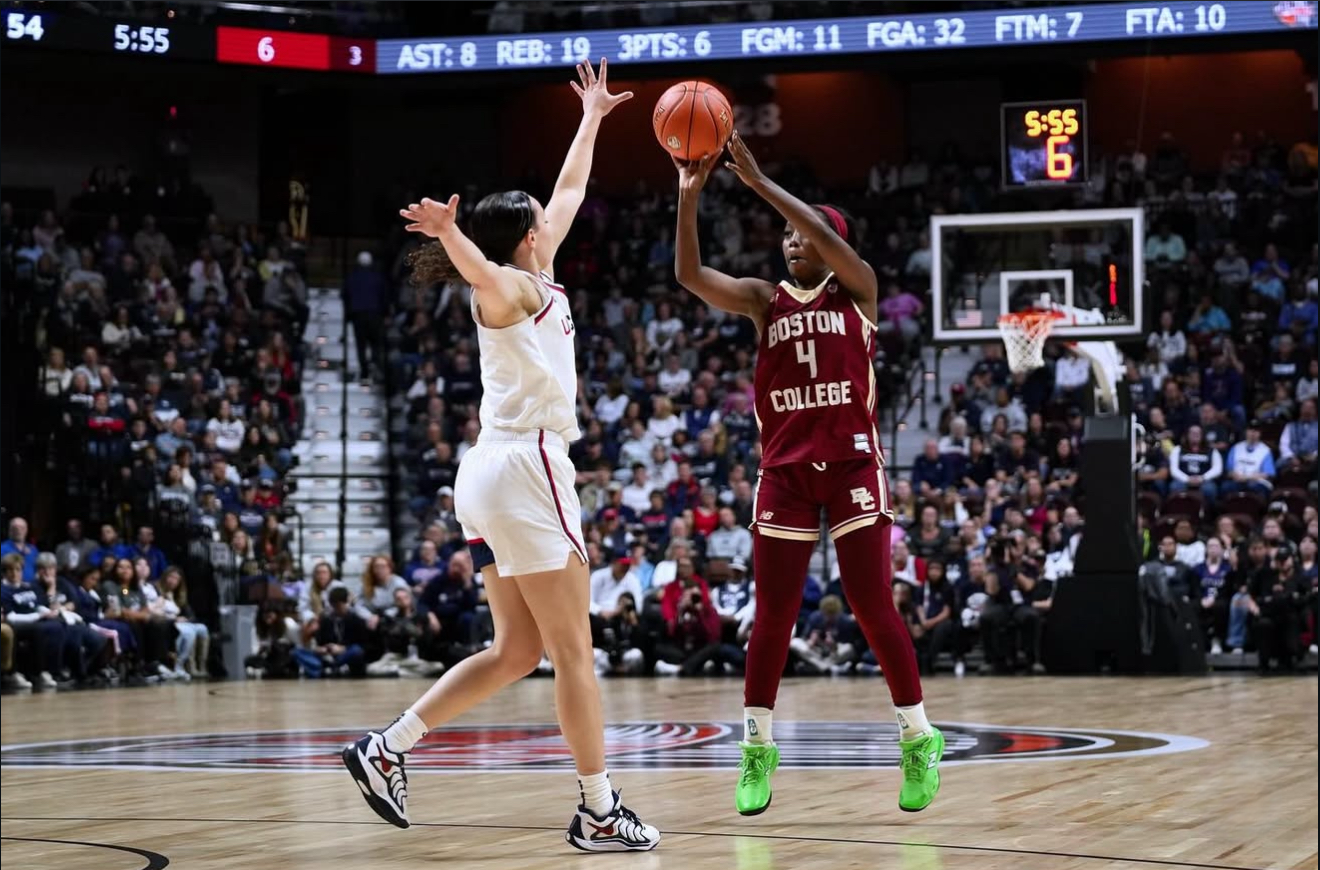
This injury affects athletes across most sports, however, female athletes are particularly susceptible to tearing their ACLs, especially in basketball. According to a 2016 article in the Journal of Orthopaedics, female basketball players experience ACL tears three and a half times more often than their male counterparts.
“It’s been a trend for a long time,” said Berg. “You would hope that with advances in women’s sports, you would see less and less tears… Unfortunately, it looks like it’s not really getting better yet.”
(Photo: John Sexton)
The ACL is a band of tissue in the center of the knee that connects the femur (thigh bone) to the tibia (shin bone). The tissue creates stability in a person’s knee, allowing him or her to pivot or rotate without feeling like the knee is giving out.
“If you’re an elite athlete,” said Berg, “it can be very challenging to do rotational or cutting movement (with a torn) ACL.”
As for why this injury occurs more commonly among female athletes, Berg believes it is a mix of anatomy and education.
“I think the biggest component to it is actually education and training,” said Berg. “You have young girls who are predisposed to being more prone to having an ACL tear by how their body alignment is.”
Berg explained that women generally have wider hips compared to men, and their knees tend to tilt inward. This alignment changes the positioning of the knee joint, raising the risk of ACL injuries during actions like jumping, pivoting and landing.
“A huge reason why you see non-contact ACL injuries,” said Berg, “is from a plant and a kid’s knee caving in on some rotational movement that their body can’t keep up with.”
She believes that the key to minimizing the chance of a tear is preventative training when athletes are young.
“I would have kids doing a lot of strength training,” said Berg, “a lot of learning how to jump, how to squat, how to land. Unfortunately, we do not teach girls that stuff young enough. There’s still a gap between teaching young girls and boys about sports, and you have girls falling behind in terms of proper mechanical training.”
(Photo: John Sexton)
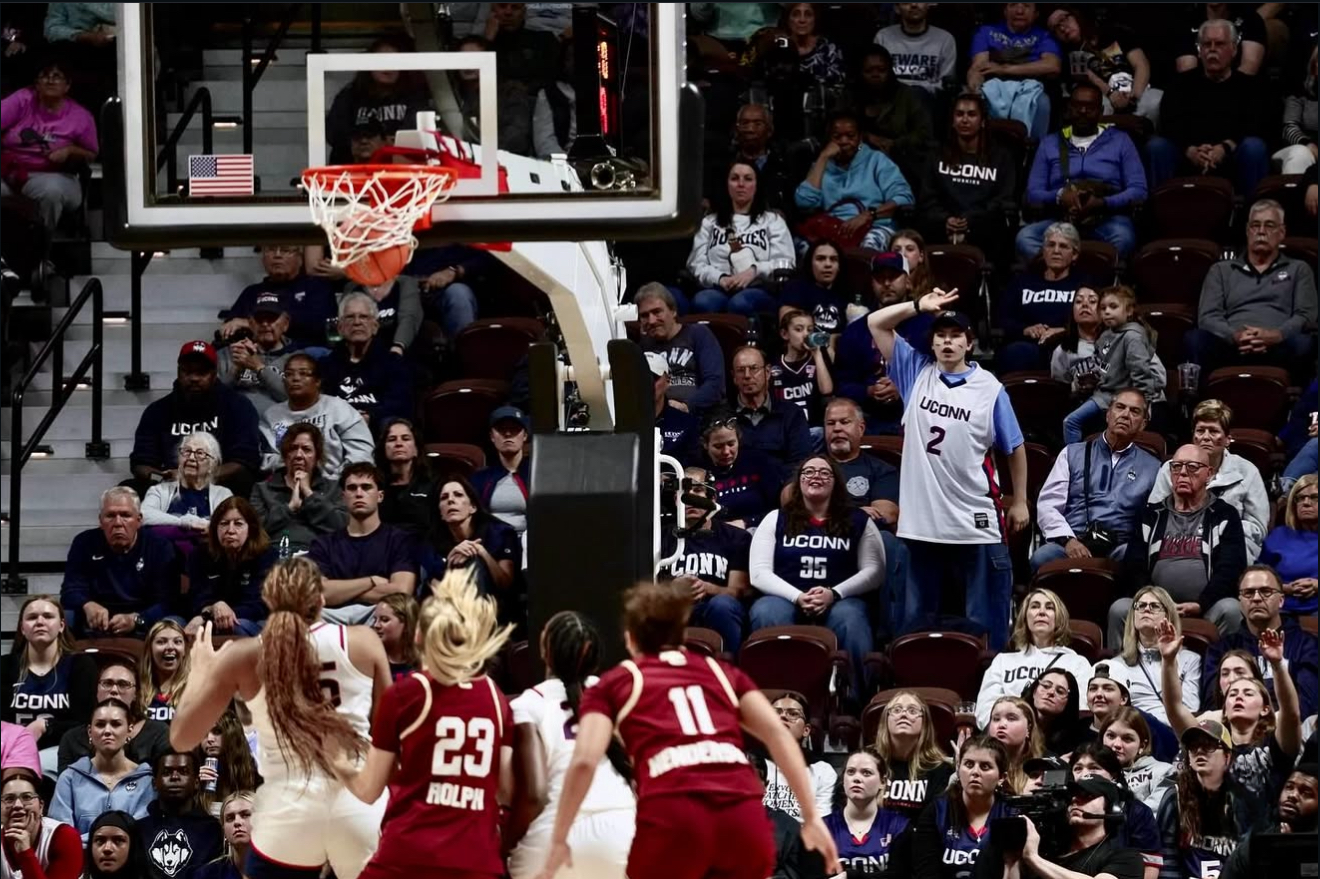
At BC, Berg and strength and conditioning coach Brandon Sanders commit to teaching their players, especially those who have suffered tears before, the proper techniques so that they can avoid injury.
“If I get a kid that has an ACL tear, they spend almost nine to 12 months with me,” said Berg. “We break it back down to the beginning when it comes to the stages of jumping, running and cutting. For example, with jumping, we’re going to jump, and you have to land correctly almost every single time. We talk about soft landings and bent knees and never doing anything with a straight leg.”
The issue with teaching college players these skills is that it may be too late in life for elite athletes to change their mechanics.
“By the time they get to me in college,” said Berg, “it’s almost a little too late. Can you imagine breaking someone of a habit they’ve had for 12 or 15 years? It’s really hard, especially when they’ve made it this far.”
The challenge is not just fixing movement patterns at the college level. It is preventing them from developing in the first place. ACL tear-prevention training for girls needs to occur earlier in their athletic careers.
“I think that if you were a high school coach,” said Berg, “in the most ideal setting, you would designate 10 to 20 minutes, three times a week for an ACL prevention program, which is learning how to jump, learning how to cut, learning how to run and accelerate properly, and decelerate.”